A glimpse into my world of food

Wednesday, June 20, 2012

Koji magic


I decided to look into koji after eating koji marinated pork at Ootoya, which opened a few months ago near Union Square. My mum was raving about it while I was back home and there has been a koji boom in Japan since last year. Until I did a bit of research I didn't know about the health benefits.

Koji is not a new thing in Japan. It's the essential ingredient for making all the iconic Japanese products including soy sauce, miso and sake. Apparently it was popularized in a food based manga, and I've also heard that the interest peaked shortly after the earthquake and tsunami of March 2011 because people became even more health conscious.

Koji is Aspergillus oryzae in English and is a fungus that derives from fermenting steamed rice, wheat or soybeans. You can buy dry koji rice to make either shio-koji (salted koji) or ama-koji (sweet koji).

Soy sauce and sake are typically pasteurized so the benefits of koji are lost. But by using koji rice as a condiment or marinade, you can get all the benefits from the live enzymes and live culture (lactobacillus). Koji can break down proteins into amino acids (including glutamic acid, responsible for umami) and starch into sugars. 

In fact, Nanbu Bijin has patented their no sugar added umeshu (ume plum sake), which is sweetened only with koji. This means their umeshu has a lot less calories and added sugars, hence is healthier. Other umeshu typically includes as much sugar as ume plums in weight. I don't think I can go back to drinking other umeshu after having tasted this stuff! Ama-koji can be used in place of sugar as a healthier alternative. It is made by cooking rice, folding in koji rice, and letting it slowly ferment in the rice cooker.


I was interested in shio-koji because of the ability of it to enhance umami in proteins. Apparently it's especially true when combined with chicken, which is high in protease, which is responsible for making glutamic acid. After marinating meats in shio-koji overnight, glutamic acid can increase by as much as 30%. It also has a tenderizing effect. The great thing about shio-koji is that you can greatly reduce the amount of salt you use because the umami is enhanced. Also, the result is a nice balance of saltiness with a hint of sweetness from the koji. 


The basic ratio for making salt koji is 3 to 1 (koji to salt). 


1.       Combine the salt and koji and place in a plastic container (avoid stainless steel or metal containers).
2.       Pour just enough water to cover the mixture. Keep covered and store in room temperature (during winter, store in a warm area for a week – 10 days and during summer store for about 5 days).

3.       The next day, it will have absorbed most of the water so add just enough water to cover the mixture and stir well.
4.       After the second day stir the mixture well once every day (but do NOT add more water).

5.       After 5 days (summer)- 10 days (winter), the fermented koji marinade will be ready to use.
6.       Use approximately 7-10% of the food weight in koji. For example, if you are marinating 1 lb of pork, marinate in 1.12- 1.6 oz of the koji mixture. 

7.       For vegetables (turnip, cucumber, cabbage etc), marinate for up to half a day. There is no need to wipe off the koji mixture.
8.       For meat and fish, marinate anywhere from 1 hour to half a day (varies depending on the protein and cut/size). Chicken wings only need to be marinated for 1-3 hours.
9.       The koji marinade burns quite easily so wipe off any excess marinade before cooking.


As you can see in the photo the pork that was marinated in koji looks like it nearly burned. I love the smell of cooked meat marinated in koji. It's like miso-marinated meats without the pungency. It's not as salty either, with a pleasant sweet finish. I only marinated this pork for three hours but I think the koji did wonders. It was more tender and obviously more flavorful than the pork I seasoned with just salt and black pepper.


I also marinated chicken wings for just a couple of hours and baked them in the oven. This was by far my favorite use of shio-koji. Hard to believe that just koji and salt with a bit of cracked black pepper can make something this flavorful!


Labels: , , , , , , , , , , , , , , , ,

Tuesday, May 1, 2012

Aya's Kitchen: Hiyayakko with Salmon Ceviche & Red Yuzu Kosho Dressing


4 servings

8 oz Tofu, cut in quarters                     
                                   
4 oz Salmon, sliced thin                            
Salt and black pepper                         
1/2 ea Avocado, diced small                                         
1/2 ea Tomato, diced small                           
1/2 ea Red onion, sliced thin                         
3 tbsp Lime juice (add more if you like)                                          

2 tsp Red yuzu kosho                                  
4 tsp Extra virgin olive oil                          
1 tsp Lime juice                                         

Minced chives                                     

1.      Combine the salmon, tomato, avocado, red onion and lime juice and season to taste.  Leave to marinate.
2.      Place over the tofu and drizzle with the dressing.
3.      Garnish with minced chives.

So simple but good! A great summer dish with the acid from the lime and heat from the kuzu kosho.  Try garnishing with crispy fried shallots or garlic if you're missing the crunchy factor.

*Red Yuzu Kosho is available at Japanese supermarkets in New York City such as Sunrise Mart and Dainobu (distributed by New York Mutual Trading)


Labels: , , , , , , ,

Wednesday, August 3, 2011

New York City Review: Rosanjin

Rosanjin
141 Duane St
212-346-0664

Rosanjin was a very interesting find.  I initially came across the restaurant's name when I was looking for Japanese restaurants to work at, and the food seemed very authentic but there was very minimal information and reviews about it online.  I went there on a Thursday evening and my friends and I were the only customers! The restaurant only seats about 24 people but it was surprising to see no other guests.

I immediately noticed that the servers were slightly awkward, but friendly.  They didn't quite seem to know what they were doing.  It was an unusually hot day that day and they gave us a hot towel (would have appreciated a cold one).  We ordered the $80 kaiseki course, which we had to indicate when we made the reservation on Open Table.

The food I had at Rosanjin was probably the most authentic refined Japanese food I've had in New York City (along with my meal at Inagiku at the Waldorf Astoria).  The $80 course filled me up about 90% and we all thought the price was very reasonable.  Why then is there so little publicity about this restaurant??? The restaurant is owned by a Korean man who spent a lot of time in Japan (in fact his Japanese sounds native), and he is new to the industry.  I think if they had a better front of house manager and put in more effort to market the place, they could really make a name for themselves.  It's a shame that not more people know about Rosanjin because the food was excellent.

Green tea tofu with tonburi (mountain caviar) and nagaimo (Japanese yam)- cut ridiculously fine

Sashimi course: botan ebi (a very sweet shrimp), toro (tuna belly), uni (sea urchin) and hirame (flounder)
Grilled gindara (sable fish) with daikonoroshi (grated daikon radish), myouga (like ginger), abalone and shrimp

Ebi shinjou (grated shrimp and fish with egg whites) with gomadoufu (sesame tofu), fiddlehead fern and satoimo (Japanese yam)


Tempura (the one with the little rice crackers around it was scallop)

Pickles, corn rice and miso soup
Desserts in a kaiseki meal are never elaborate- usually just fruit and/or ice cream


Labels: , , , ,

Sunday, July 24, 2011

New York City Review: Robataya

Robataya NY

231 East 9th St. New York
212 979 9674

As soon as I walked into Robataya, I felt like I was back in Japan.  Everyone greeted us with a powerful "いらっしゃいませ~" ("irasshaimase", which means welcome) and most of the staff were Japanese.  There were two cooks taking center stage, surrounded by the fresh ingredients and grill.  They sit on a low stool with a cutting board in between them and the grill.  The waiters call out the orders for the grill and the cooks repeat the order and don't even have to write it down.  They display their knife skills in front of the guests and when they finish plating a dish, they pass it over to the guests using a paddle.  The counter seats were full by 7pm or so and everyone was amused by this show.

This is one of the few authentic Japanese restaurants that I've been to in the US and I would definitely go back here for comfort food.  They use quality ingredients and simple cooking methods.  It's exactly the kind of food I love to eat.  Besides the robatayaki (grill), they also have kamameshi, which is rice cooked in the traditional way (in a kama or pot), with ingredients such as salmon & salmon roe, chicken and burdock and king crab.  Ordering may be a bit of a challenge for first timers but the waiters are prepared to explain the menu and they also have an omakase course.

Kaisou Salad (Kelp Salad with Miso Dressing)

 Grilled Edamame (best edamame I've had in the US- grilling them made them more fragrant)

Eggplant, shishito (Japanese green peppers) and Eryngi (Trumpet mushrooms)
 Asparagus
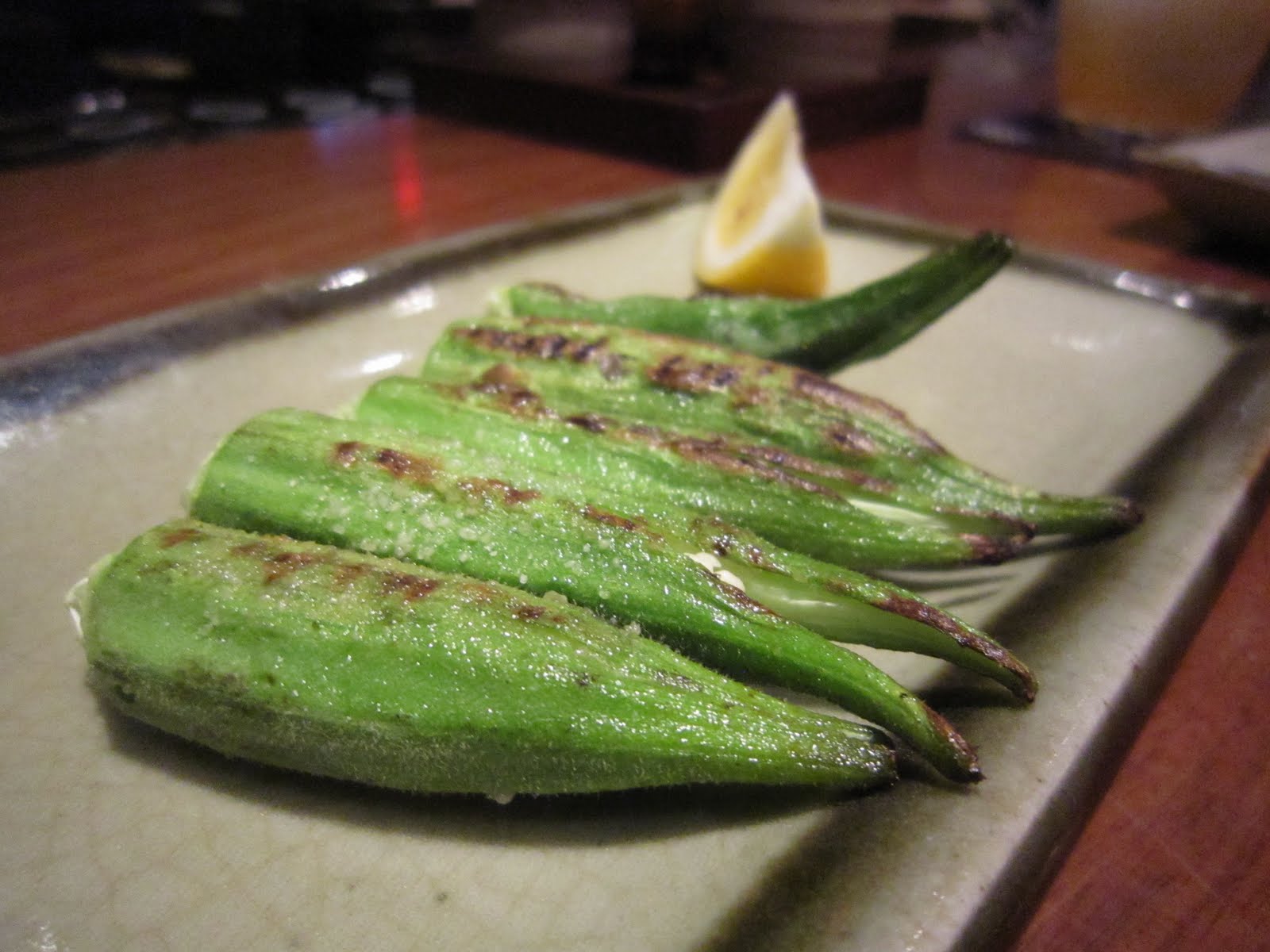
 Okra
 Gindara saikyoyaki (Sable fish marinated in miso and sake)
 Uni (sea urchin) gratin with salted konbu (kelp)
 Nama-fu Dengaku (with miso paste)
 Squid- SO tender!
 Tsukune (minced chicken with a teriyaki glaze)
 Lamb chops
 Sato-imo (Japanese taro yam)
 Kamameshi (Rice with salmon and salmon roe)

Labels: , , , , ,

Tuesday, June 17, 2008

Japan Restaurant Review: 強羅花壇 (Gora Kadan Inn)

Gora Kadan Inn
1300 Gora, Hakone, Ashigarashimogun, Kanagawa, JAPAN
+81-460-82-3331

Despite Gora Kadan's somewhat modern take on Hot Spring Inns (with the Westernized spa services and modern architechture), the kaiseki dinner they serve is very traditional. The course includes more than 10-15 small dishes and they always use the most seasonal ingredients to express the season. Their umeshu (plum wine) is my favorite; I think the hint of brandy makes it more fragrant than most plum wines. There is nothing more relaxing than enjoying a full kaiseki course meal before, and/or after a long bath in one of the hot springs. The food is not only fresh and delicious, but aesthetically pleasing as well.

Private rotenburo (outdoor bath)


An appetizer: snapper with various vegetables (broad bean, Japanese mountain yam, carrot etc.)

Abalone sushi


Ginnan Shinjou (Ginko nut soup with a light minced prawn ball)


Assortment of sashimi: Ise Ebi (Japanese lobster), Toro (fatty tuna) and Hirame (halibut)

Grilled Sawara (Spanish Mackeral) with a miso glaze

Braised tender pork croquette


Labels: , , , ,